
Can't Buy Me Love
The supermarket down the road has a forty-page report proving its social value. Your grassroots venue has passion and good intentions. Guess which one wins the planning argument.

There is a research report sitting on the Tesco website that would make a music venue operator weep. Not from sadness. More from the particular kind of frustration that arrives when you discover that someone else has already done, with enormous resources and serious intent, the thing you have been trying to do for a decade on a spreadsheet held together with optimism and a borrowed extension lead.
The report calculates, in careful detail, the community value of a Tesco supermarket. It measures footfall uplift for surrounding businesses. It quantifies the social connections formed by elderly customers who come in not primarily for the reduced-price sandwiches but because this is, on certain mornings, the only conversation they will have that day. It notes that supermarkets are among the most socially diverse spaces on the British high street, one of the few places left where people from genuinely different backgrounds end up in the same queue, standing next to each other, occasionally making eye contact over the self-checkout. It estimates that a typical Tesco store boosts local footfall by 20%, generating £700 million in additional revenue for local businesses nationally. It has done the work. It has the numbers. It has commissioned economists. It has, presumably, very good coffee in the meeting room where they presented it to the board.
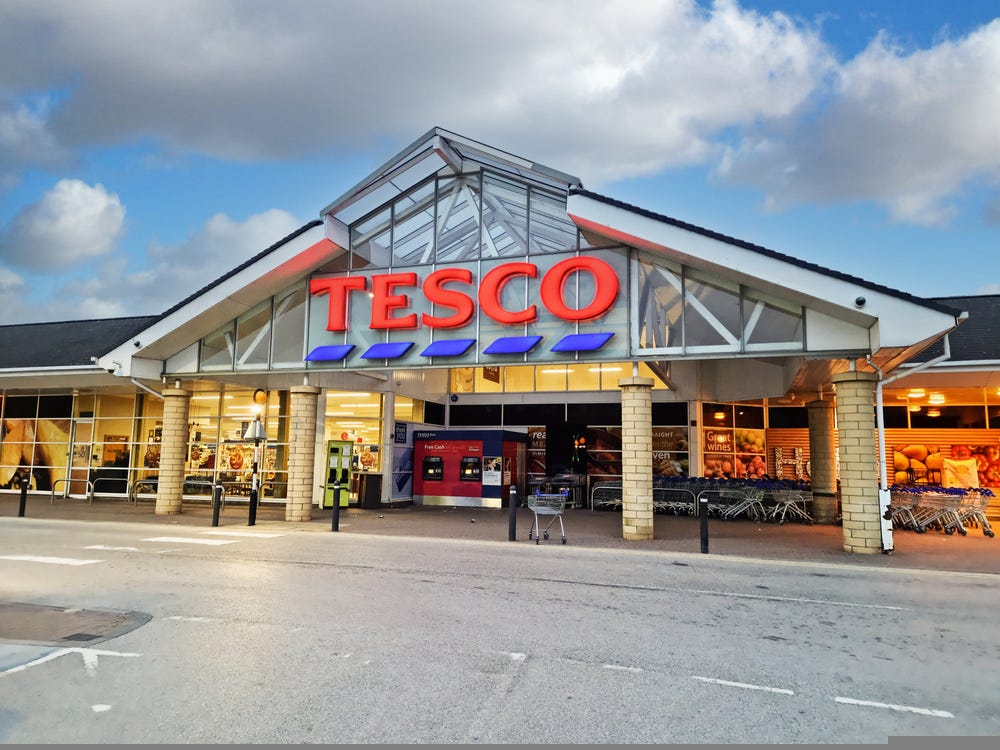
I am not here to celebrate Tesco. I want to be very clear about that before this piece gets passed around the wrong WhatsApp groups. I have the normal and reasonable set of views about the role of large supermarket chains in British economic life that you would expect from someone who has watched the communities around them change over the last thirty years. But I am here to say that Tesco understands something about community value that the music industry has almost entirely failed to grasp, and that failure is costing us the argument in every planning meeting, every licensing review, every budget discussion, and every ministerial conversation where someone eventually says, nodding thoughtfully, “yes but how do we actually measure that?”
Researchers at Cambridge University’s Bennett Institute published a study last year which described supermarkets as functioning social infrastructure. Not metaphorically. Literally. They found that people rarely distinguish between publicly and privately owned spaces when they think about where they interact with other people. A supermarket, it turns out, is a third space in the same way that a pub or a library or a music venue is a third space. People go there, they see other people, connections form, loneliness reduces, community cohesion does whatever it does when it’s working properly. The researchers concluded that this social function was real, measurable, and commercially valuable to the businesses providing it. Tesco knows its community value in the same way it knows its shrinkage rate and its margin on own-brand pasta. It is a number. It is in a report. It can be put in front of a government minister.
Now think about what happens when a grassroots music venue goes to a planning meeting to argue against the development that will eventually make it impossible to operate. The venue owner - who has been paying themselves nothing for several years and running complex community infrastructure on margins that would make your bank manager physically ill - stands up and says something true and important about the role their venue plays in the life of their town. They talk about the young people who found a direction there, the communities who gathered, the sense of place it anchors. They mean every word of it. And then they sit down.
And then the developer’s solicitor stands up with a document that has been prepared by a professional planning consultant, is forty-seven pages long, and contains seventeen footnotes.
I am not suggesting that the social and cultural value of a grassroots music venue is straightforward to measure. It isn’t. The impact of seeing a band for the first time at the age of fifteen and deciding, in that specific room, that this is a thing you want to do with your life does not fit neatly into a Social Return on Investment framework, although someone should probably try. The sense of belonging that forms when three hundred people are in the same room hearing the same thing at the same time is real and important and essentially impossible to put a number on, which is convenient for everyone who would rather not think too hard about what it means when it disappears. But the argument that it simply cannot be measured is no longer as solid as it once was, because it turns out that when you put enough resource and enough genuine intent behind the question, you can get surprisingly far.
There is, in fact, a genuinely positive story to tell here. In 2011, the Victorian government in Australia commissioned Deloitte Access Economics to measure the economic, social and cultural contribution of venue-based live music across the state. Not a vague set of assertions. An actual, peer-reviewed economic study. What it found was that live music venues in Victoria were generating significant social connectedness and a sense of belonging particularly among young adults, supporting talent development, sustaining employment, and functioning as anchors for the cultural identity of cities. It put numbers around things that people in this industry have been saying for years. It gave planners and policymakers a framework they could use. It was, in short, the kind of evidence that wins the argument in a room full of people who make decisions by looking at documents rather than by going to gigs.
Closer to home, we have our own version of the community value proof, and while it is smaller in scale it is, I would argue, potentially even more significant in what it demonstrates. Over two thousand people have now invested their own money in Music Venue Properties, the community ownership initiative that sits at the heart of everything Music Venue Trust has been building toward. Not donated. Invested. With a return on that investment, modest but real, attached to the deal. In doing so, they have permanently secured seven venues (The Joiners in Southampton, The Croft in Bristol, The Ferret in Preston, The Snug in Atherton, Le Pub in Newport, The Bunkhouse in Swansea and The Booking Hall in Dover) with the next wave already well underway. The Deloitte study has the rigour of a government commission and the authority of a Big Four accountancy firm. Own Our Venues has two thousand people who decided to put their actual money where other people’s mouths have been for a decade. I know which one I’d rather take into a planning meeting, frankly, but ideally you’d want both, standing side by side, taking turns to be impressive. Think of it as a double headliner, except both acts show up on time and nobody argues about who gets the bigger dressing room.
In Melbourne, when The Tote Hotel was put up for sale and facing conversion to housing in 2023, twelve thousand people crowdfunded three million dollars in a matter of weeks to help buy the building and keep it as a live music venue. Not because someone told them to. Not because of a marketing campaign or a celebrity endorsement. Because the community that had been built inside those walls over forty-two years turned out to be real, and quantifiable, and willing to put its hand in its pocket. The world’s largest music-based crowdfunding campaign wasn’t a charity drive. It was a community making a precise and financially literate statement about social value. The only difference between that campaign and a Deloitte report is that one of them has a spreadsheet and the other one has twelve thousand people who didn’t need a spreadsheet to know what they stood to lose.
Tesco attracts 4,000 shoppers a day to a typical store. A grassroots music venue is part of a network that delivers 19 million audience visits a year across the whole UK circuit. It employs people in towns where, bluntly, nothing else offers them the employment they want. It keeps high streets alive after dark. It is one of the few reasons left in some communities for young people to actually leave the house and stand next to other human beings rather than consuming everything through a screen. The research exists to make these arguments with the same rigour and authority that a supermarket uses to justify its community presence. The Social Value Act has been on the statute books since 2012. The Social Return on Investment framework is not new. The tools exist. The Australian precedent exists. The community investment precedent exists right here in the UK.
What needs to happen now is neither mysterious nor especially expensive, relative to the problem it would solve. The UK needs a properly resourced national Social Return on Investment study for Grassroots Music Venues, commissioned independently, conducted rigorously, and published in a format that a council planning officer can actually use on a Thursday afternoon when a developer’s solicitor is sitting across the table with their forty-seven page document. The sector needs to stop arriving at these arguments with passion and leaving without the numbers, because passion is wonderful and completely inadmissible as evidence. We need the music industry, which has never been short of money at the top end, to fund the research that protects the bottom of the pyramid it depends on. We need government to recognise that the Social Value Act exists precisely for moments like this, and that applying it consistently to cultural infrastructure is not an ideological position but a practical one.
The argument isn’t “trust us, this matters.” The argument has to be “here is the number, here is the methodology, here is the independent verification, and here is what this community loses, in measurable terms, when we are gone.”
Tesco has already proved it can be done. Australia has proved it can be done. Two thousand people in the UK have already started doing it with their own money. And here is the genuinely exciting part: the music industry, at its best, is extraordinarily good at doing things that other industries consider impossible. It built the LIVE Trust. It is delivering the grassroots levy. It found a way to make community ownership of music venues not just a theory but a set of actual deeds in an actual filing cabinet. The same creative energy and collective will that made all of that happen could commission the most compelling piece of social value research this country has ever produced for a cultural sector, and in doing so hand every venue operator in Britain a weapon they currently walk into battle without. That is not a burden on the industry. That is the industry finally being given the chance to protect the foundation it has always known it needs.
Every little helps, as someone once said. Though presumably not while stacking chairs at 2am.
Excellent article. I'm studying accountancy at the moment and it's wild how many methodologies there are for quantifying every aspect of a product's lifecycle. Presenting information in numbers is the only way you can justify investments to investors - and rightly so. It must be done.
Preaching to the choir here with this addendum but a supermarket’s social value is incomparable to that of a music venue. People need food or else they will die. A lot of people don’t realise that there is less point in eating food if there are no social spaces for communal sharing in music and the arts left.
I’m waiting for funeral directors and Southern Water to conduct similar social value reports for things that humans literally can’t live without or else they’ll dry out and risk being unceremoniously dumped into a trench.
Inspiring, compelling and vital ideas from you again, Mark. Thank you.