
Once in a Lifetime
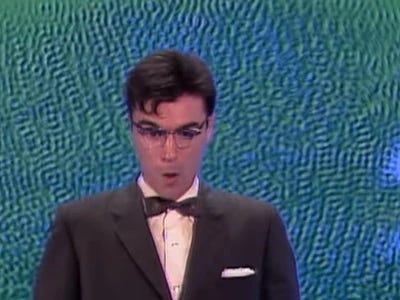
Sometimes the way government's act is so painfully bizarre that it feels like you're watching David Byrne do interpretative dance.

There are two tribes inside the British tax system. One of them gets £8.2 billion a year in research and development relief, hands-off and on principle, because the state has decided that investment in innovation deserves support. The other tribe gets 20% VAT charged on the one mechanism it has built to fund its own research and development, because the Treasury says fixing that would be administratively too complex.
Welcome to the United Kingdom in 2026, where the largest pharmaceutical companies in the country receive hundreds of millions of pounds annually in tax relief on R&D expenditure without anyone in HM Treasury raising so much as a marketing test, and where the grassroots music sector receives a 20% VAT charge on a voluntary industry levy designed to do exactly the same job for British musical talent.
Let’s start with the numbers, because Maths is always your friend. The United Kingdom runs over a thousand tax reliefs and allowances. In just a small corner of these, corporate Britain receives £8.2 billion annually in R&D tax relief, £2.2 billion in creative industries reliefs (much of it flowing to American streaming companies producing television in the United Kingdom), £1.2 billion in Patent Box relief, several billion more in capital allowances. AstraZeneca and GSK between them dominate UK corporate R&D spending, claim tax relief on that spending running into hundreds of millions of pounds each year, and in 2023 were the only two UK-headquartered companies in the world’s top 100 R&D investors. Disney shoots in Pinewood with a 25.5% audio-visual expenditure credit attached to its entire production budget, no questions asked. High-end television production in 2022-23 alone received £1.1 billion in tax relief from a regime that exists because the British state has decided, correctly, that the production of premium drama in the United Kingdom is something worth subsidising through the tax system. Nobody objects to any of this. A modern economy needs research, innovation, and cultural production, and the state has a legitimate role in lowering the tax cost of those activities.
The question is why, when it comes to live music, none of this exists. For clarity, no ‘not enough of it’. None of it.
There is no R&D relief for the grassroots music venue developing the next generation of British artists. There is no creative sector relief for the promoter who books an unknown band for £200, takes the financial risk, builds the audience, and creates the conditions in which that artist eventually fills arenas, sells records, attracts streaming revenue, and pays corporation tax to the same Treasury that refused to recognise the upstream investment. The relief schemes that exist for film, television, theatre, orchestras, museums and galleries, video games, animation, high-end TV, children’s television, every single one of them, exclude live popular music as a matter of design. We are still in the early argument stages of attempting to push through a Performing Arts Creative Skills Tax Relief, despite the Arts Council’s own February 2026 review recommending one. There is no equivalent of the Patent Box for the intellectual property created when 800 venues host 32,000 emerging artists every year.
Music Venue Trust has been asking, year after year, submission after submission, paper after paper, for the British state to acknowledge that the live music sector performs a function the tax system already recognised everywhere else, and the answer has consistently been a sympathetic nod, a warm letter, an expression of support for the cultural value of grassroots music, followed by the maintenance of a tax regime that treats live popular music as if it were a luxury good rather than the upstream R&D function of a £7.6 billion industry.
Kind words butter no parsnips. The British music industry contributes £7.6 billion in gross value added to the UK economy, exports £4.6 billion in services every year, generates more global cultural reach than any other sector of comparable size, and is built on a talent pipeline that depends almost entirely on a network of grassroots venues operating at margins so thin that 125-plus venues have closed in the last three years alone. Every minister, every shadow minister, every parliamentary select committee, every government official, every Treasury private secretary has had the data. They have all had the analysis. They have all expressed support. They have all, without exception, declined to act.
None of this is new, and none of this is the fault of one government. The British tax system has been shaped, across successive administrations of every political colour, by the people who can afford to shape it. Multinational corporations arrive in Whitehall with KPMG behind them, with Deloitte at their elbow, with a Big Four tax partner on the phone, with a parliamentary affairs team in Westminster, with a former permanent secretary on the advisory board, and with a draft clause already written for the next Finance Bill. Pharmaceutical lobbyists wrote the architecture of R&D relief. The Hollywood studios wrote the architecture of the audio-visual expenditure credit. The patent-holding multinationals wrote the architecture of the Patent Box. Each successive Treasury, Conservative and Labour alike, has accepted these arrangements as common sense, because by the time the arrangements reach the Treasury they have already been pre-cooked, pre-costed, pre-modelled and pre-justified by some of the most expensive professional services firms in the world.
Community-grounded organisations, the small functioning entities like music venues or sports clubs or drop-in centres that people can actually experience and recognise as making a difference to their own lives, do not arrive in Whitehall with any of that. They arrive, if they are lucky enough to get through the door, with a CEO, perhaps a policy officer, a stack of survey data, and a faint hope that this time the meeting might result in something other than a thank-you letter. The grassroots music venue your kids saw their first gig in does not have a parliamentary affairs team. The community pub where the local folk session has run for thirty years does not have a Big Four tax partner. The independent festival on the edge of your town does not have a draft clause for the next Finance Bill. The tax system reflects this, in every line of it, in every relief that exists and every relief that does not, and successive governments have been content to let it be that way.
This is the context in which the Grassroots Levy now exists. The voluntary levy on arena and stadium tickets, agreed by the live music industry after years of campaigning by Music Venue Trust and then LIVE and the LIVE Trust, is the closest thing the sector has ever had to a structural reinvestment mechanism. Under this industry-led initiative, the largest beneficiaries of the talent pipeline (stadium tours, arena dates, the biggest festivals) contribute a tiny proportion of their ticket revenue back to the grassroots venues where those artists were developed. The mechanism is voluntary in the first instance, with a mandatory backstop if voluntary compliance fails. It is, in every economic sense the Treasury claims to value, an R&D contribution. Money flows from the commercialised end of the music industry back to the upstream development function that produces the artists in the first place. It is the precise economic logic on which the entire R&D tax relief system is built.
If you read this column regularly you will already know this, but for those of you who just joined us, get yourself a stiff drink and maybe have a sit down, because despite everything you’ve ever heard a government minister say about the importance of the grassroots, of our communities, local accessibility, and supporting the future of vibrant towns and cities, HMRC has decided to charge VAT on that levy. Decided is the precise word that is relevant and here’s why.
Twenty per cent of each levy contribution, 16.6p out of every £1, is removed at source. The Treasury has been asked, repeatedly and at length, to confirm that the levy can be structured outside the scope of VAT. The Treasury has been asked, repeatedly and at length, to issue guidance that would allow the levy to flow as designed without VAT being demanded. The Treasury has done neither, and the reason offered has been administrative complexity. Let’s quote them exactly, so no one can claim that words don’t mean what they mean or deny they said it:
“VAT is applied to the full amount paid for a ticket, and the £1 contribution forms part of that price. Excluding it from VAT could create inconsistencies across the tax system, which would increase complexity, blur the boundary between ticket prices and donations, and risk opening up scope for avoidance.”
A bespoke VAT treatment for a single industry mechanism, we were told on Monday 18 May, would be too difficult to design, too difficult to draft, too difficult to implement, and too difficult to police. And then, on Thursday 21 May 2026, just three days after stating they absolutely could not act on it, the Treasury did exactly, precisely, directly, literally word-for-word, the exact thing they say they cannot do in the exact area of the market in which they say they cannot do it in the exact way they say it cannot be done. Only for something, and someone, else.
The Great British Summer Savings scheme was announced as a Ministerial Statement and accompanied by Revenue and Customs Brief 5 (2026), running to several thousand words of qualifying complex and confusing conditions. How complex or confusing? From 25 June to 1 September, VAT on children’s meals in restaurants will be reduced from 20% to 5%, provided the meals are clearly presented as dedicated children’s meals via a separate children’s menu, provided they are not takeaway, and provided they are not simply smaller adult portions or discounted adult meals. VAT on children’s and family tickets for cinema, theatre, exhibitions, shows and concerts will be reduced to 5%, provided the tickets are marketed, priced and presented as intended for children. Season tickets do not qualify unless priced the same as single-entry tickets. Repeat-entry tickets only qualify if used within the relief window. Prepayments require businesses to retrospectively adjust their VAT accounts and refund customers any difference. Admission tickets to theme parks, zoos, museums, soft play centres, adventure parks, fairs and observation attractions will be reduced to 5% for all customers, child and adult alike. The scheme will cost approximately £300 million, will run for ten weeks, and is being implemented by statutory instrument operating inside a five-week lead time.
This scheme was designed, drafted, laid before Parliament and operationalised in a what feels like about five hours but may have been as much as a matter of days. It requires businesses and HMRC to agree to distinguish between a child’s portion and a smaller adult portion. It requires venues and operators to determine whether a ticket has been correctly marketed, priced and presented and then present that case to HMRC. It requires businesses to retrospectively adjust prepayment VAT and process customer refunds. It is, by any reasonable measure, an administratively complex and highly confusing VAT scheme of precisely the kind the Treasury has spent the last two years telling the music industry it cannot design.
Don’t worry, it’s not just that the Treasury says one thing on Monday and then does exactly the opposite thing on Thursday, that would just be painfully misleading and incredibly bad practice. This scheme is significantly worse than that, because the cut is unlikely to be passed on to customers at all. With a five-week lead time, in an industry that publishes seasonal pricing months in advance, that operates on yield-managed dynamic ticketing systems requiring weeks of repricing work, that prints physical signage and menus on quarterly cycles, the operational reality is that the vast majority of qualifying businesses will simply not have the time, the systems, or the commercial incentive to reprice their offer. Theme parks have already published their summer pricing. Cinema chains have already programmed their box office systems. Restaurants have already printed their menus. The scheme’s own fact sheet says the government “expects” businesses to pass the savings on, which is Treasury code for “we have no enforcement mechanism whatsoever”.
What will actually happen is straightforward and predictable. The largest UK entertainment operators (Merlin Entertainments, owner of Alton Towers, Thorpe Park, Legoland Windsor and Chessington World of Adventures, which between them dominate a £1.4 billion UK theme park sector and are themselves owned by Blackstone, KIRKBI and CVC Capital Partners) will likely collect the 15-percentage-point VAT differential at the till on tickets already priced for the summer season, pocket the majority of the windfall as margin, and report improved EBITDA to their private equity owners at the next quarterly board meeting. The Vue and Cineworld chains will do almost certainly the same on cinema tickets. The major restaurant groups will do the same on children’s menus they already had in place. The £300 million Great British Summer Savings package is, in its real-world operation, a £300 million transfer from the British taxpayer to the private equity owners of the United Kingdom’s largest entertainment infrastructure, dressed up as a cost-of-living measure for families.
What you certainly cannot do is operationalise the Summer Savings scheme in a 200-capacity grassroots music venue. The door price is the door price. There is no children’s menu. There is no qualifying family packaging. The scheme is not designed for grassroots music, will not apply to grassroots music, and will not deliver a single penny to grassroots music. It will, however, generate several hundred pages of HMRC guidance and several thousand hours of compliance work for hospitality businesses, in pursuit of a ten-week price reduction on theme park admissions that will not, in practice, be passed on to customers. It’s tempting to view that as VAT offset gouging by the biggest companies, but the reality is there isn’t anyway for them to deliver it within the window they have been given at extraordinary expense.
To summarise: Eight point two billion pounds a year in research and development relief already flows to corporate Britain, without a marketing test, without a packaging condition, without a single edge-case carve-out. Two point two billion pounds a year in creative industries reliefs already flows largely to American streaming companies producing television in the United Kingdom. Three hundred million pounds is being spent, this summer, on a temporary VAT relief that will substantially accrue to the private equity owners of the country’s largest entertainment operators rather than to the families it claims to support. Meanwhile, twenty per cent VAT is charged on a voluntary industry levy, built by the British music industry itself, designed to do for live music what the R&D relief does for AstraZeneca and the audio-visual expenditure credit does for Disney, without any cost to any taxpayer, and the government is going to take 20% because they want to. The Treasury claims it cannot fix this. The Treasury is, and I don’t use this term lightly, lying.
Sometimes, sitting in another committee room, watching another minister nod sympathetically at another set of numbers showing another year of grassroots venue closures, I find myself thinking about that David Byrne line “You may ask yourself, well, how did I get here?”
How did we get to a country where the Treasury can design a VAT relief scheme for theme park admissions and Happy Meals in five weeks but cannot design one for a music industry levy in two years? How did we get to a system in which the private equity owners of Alton Towers receive a windfall transfer of public money this summer while a 200-capacity venue gets 20% less out of a voluntary levy contribution that was supposed to keep its lights on? How did we get here? The letters pile up, the papers stack towards the ceiling, the submissions vanish into the void, the water carries you, the days go by, and back comes the same answer in slightly different language, like an AI chatbot trained exclusively on the words “we note your concerns”. Same as it ever was, same as it ever was.
Somewhere in Whitehall, a civil servant has been working through the night drafting the eighteen-page HMRC guidance note on how to distinguish a children’s 6 chicken nugget meal from a smaller adult 6 chicken nugget meal, while the file marked VAT treatment of the grassroots music levy sits in a tray, untouched, unloved, gathering the gentle dust of a problem they claim is too complicated to solve, on a desk sat next to the desk where the chicken nugget question was answered before the morning coffee arrived.
Dear Treasury: Could we have a word about the difference between ‘cannot’ and ‘will not’?
Makes you want to weep. Sadly I had a similar experience running a campaign over the pandemic for 2.9 million self- employed and small business directors excluded from support packages. Because the Treasury said it was administratively too difficult. When we got an ex-Treasury bean-counter to tell them how to do it they changed their reason to exclude so many to ‘fraud risk’. It’s a long hard road.
Brilliant, and I don’t use that lightly or, indeed, ever.
The ‘it’s too hard’ (or similar) repeats what I have had thrown back at me when I objected to the UKAT fund excluding (discriminating against…) bands who self-promote their tours. We can’t even apply to evidence that we meet the criteria for consideration of underwriting a tour.
It’s “too difficult” their CEO (and another only the other day) said.
Yet they take the word of a promoter with as much or more self-interest. Insultingly they are implying both that the bands and their managers will not tell the truth about their touring history and/or that promoters will always tell the truth.
Meanwhile the MMF/FAC/MU seem to have forgotten they are supposed to be representing ALL managers and artists and musicians, rather than promoters and agents.
All that said, and on a lighter note, I do want to borrow the ‘Kind words butter no parsnips’ expression. A delight to read that. It made e chuckle. What is the fee for licensing its use?
Lightheartedness aside, I hope this exposition gathers support and it certainly has mine fwiw. Thanks Mark for doing what you are doing.