
Parallel Universe
The budget speech you wanted to hear, the one where the Government actually delivered the radical approach to culture and creative industries they keep talking about.

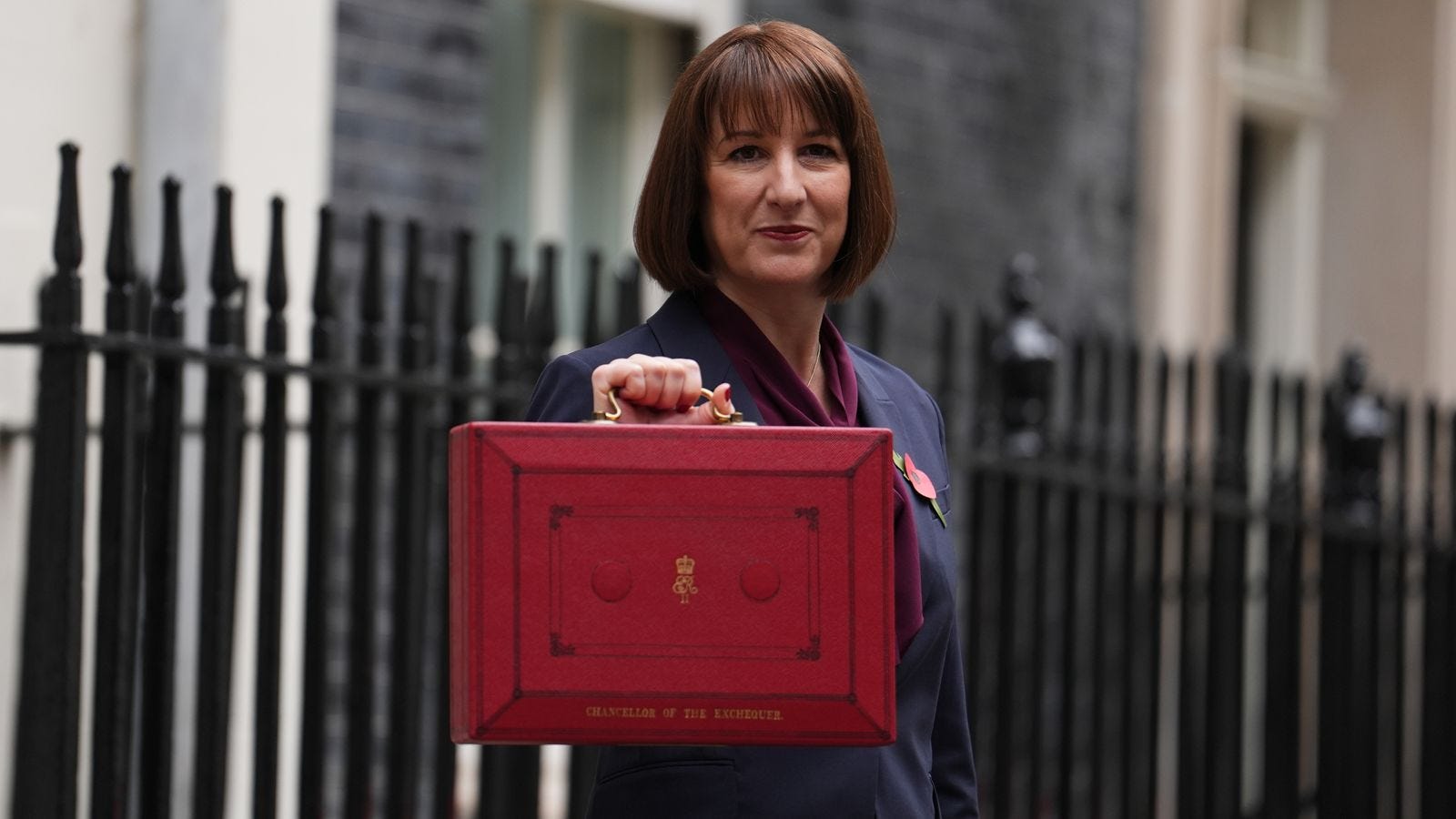
“…Madame Deputy Speaker, I turn now to Britain’s Creative Industries and Cultural Sector, left entirely out of Budget speeches by my predecessors. It will take a central place in my budget, at the heart of the transformation of the country where it belongs, as envisaged by my right honourable friend the member for Wigan, the Secretary of State for Culture, in her excellent Creative Industries Sector Plan.
This Budget is about rebuilding the foundations of growth in every town and city of the United Kingdom. That means stronger high streets, vibrant communities, and the renewal of the creative economy that has been one of Britain’s global strengths for generations.
Today I want to speak directly about a part of that economy that has been overlooked and undervalued for far too long. Grassroots music venues are not just places where bands begin. They are places where local economies thrive, where young people gain their first creative skills, where high streets stay alive after dark, and where the long pipeline of British talent begins.
But the facts before us are stark. More than 150 of the venues where Ed Sheeran learned his trade have closed. Less than a third of the venues Oasis played on their first tour remain. Forty six venues closed last year and nearly as many stopped operating as grassroots spaces. Almost half the remaining venues made a loss. These are businesses operating on margins below half a percent, facing the highest cultural VAT in Europe, unfair business rates, and severe shortages of skilled technical staff.
This is not a niche problem. This is a threat to the entire eight billion pound music economy which depends on a functioning grassroots sector. And it is a threat to thousands of jobs in staging, production, recording, design, logistics, and hospitality. If we let this foundation collapse, the industry built upon it collapses too.
So today this government acts.
We will put grassroots music venues on a sustainable footing with a long term framework that reflects their economic contribution, their role as the research and development base of one of Britain’s strongest global industries, and the immense hidden value they bring to the social and community fabric of life in the UK.
I will set out each measure in turn.
First, we will introduce a new Performing Arts Creative Skills Tax Relief. This will support the skilled technical and creative workers who make live performance possible. Sound engineers, lighting technicians, producers, stage managers, marketing and programming specialists. The people every show depends upon but whom venues can no longer afford to employ or train.
This relief will allow eligible venues to claim 80 percent of relevant wage costs, or 100 percent of UK based wage costs, for these crucial roles. It will apply to venues up to 700 capacity presenting original live music, comedy, or theatre. It will include a tax credit for loss making venues to ensure that the smallest operators benefit. And it will support investment in the equipment these roles require.
This measure will begin as a three year pilot. The projected cost is modest compared to the return. The wider economic benefit exceeds five times the investment and the impact will be felt most strongly in regional towns where skills shortages are acute. This is targeted, efficient support that boosts productivity and fills a recognised labour gap.
Second, we will modernise the UK’s cultural touring tax framework. The current reliefs were formed for a different era when the country believed in the outdated concept of highbrow and lowbrow art forms. This Government understands that whatever form it takes, creativity and culture are essential tools for the social, economic, and community well-being of the nation. Orchestral Tax Relief and Theatre Tax Relief are excellent tools to support that vision, but they exclude most contemporary touring musicians, even though they face equal or greater production and personnel costs. This is an outdated distinction that makes no economic sense and places modern British music at a structural disadvantage.
So we will rename and reform Orchestral Tax Relief as Music Touring Relief, replacing the requirement for twelve instrumentalists with a requirement for twelve people in total involved in the production and organisation of the concert. We will similarly amend Theatre Tax Relief to Performance Tax Relief so that it can support venues at the grassroots level that host live performance but are not organised as touring theatre companies.
These reforms level the playing field. They recognise contemporary music as an equivalent cultural endeavour to other areas of our creative industries where support is already offered and proves effective. And they give artists and independent promoters a genuine incentive to take risks and invest in touring at the early stages of a career.
Third, we will act on Business Rates. This government, and previous governments, have committed time and again to a full review of the Retail, Hospitality and Leisure sector. Today I am announcing the conclusion of that main review, but I am going to recognise that its broad brushstroke of reforms do not go far enough to protect our vital music spaces. My government will launch a dedicated valuation methodology for grassroots music venues. These venues have been assessed inaccurately for more than a decade because the Valuation Office uses a method designed for pubs and bars. This has repeatedly produced unjustified valuations far above what venues can sustain and has driven closures.
We will work with the Valuation Office to establish a Fair Maintainable Turnover Valuation method specific to grassroots venues, recognising their trading hours, their programming constraints, and their community purpose. As the creation of this new assessment methodology will take some time, I am announcing an interim 40% Rate Relief specific to Grassroots Music Venues until that work is concluded. I announced that Film Studios would enjoy the same level of relief from Business Rates, 40%, in February, and the case for lower Business Rates for our venues is equivalent to the case we listened to and acted upon for the film sector. This new 40% GMV Relief will be additional to transitional relief and will ensure that venues are not unfairly penalised by the tax system.
This is a reform that finally delivers what successive governments have promised but not completed. It protects high streets. It encourages investment. And it creates a fairer system that does not reward digital businesses for having no physical presence while burdening those who do.
Fourth, I want to address the grassroots ticket levy. The levy is now in place on a third of stadium and arena tickets. It is the right mechanism to ensure that the most successful parts of the music industry support the talent pipeline from which they benefit, and the industry itself must ensure that we move towards 100% adoption of the Government will take the course of Statutory Legislation to achieve the outcome required. But the current treatment of the levy by VAT undermines its purpose. If one pound is contributed and only eighty three pence reaches the LIVE Trust, then the government becomes the single biggest beneficiary of a fund intended for grassroots support.
That is not acceptable. And today I am announcing that the one pound grassroots levy will be zero rated for VAT. Where this is not legally possible, the Treasury will immediately repay the deducted VAT in full to the LIVE Trust so that the sector receives every penny intended for it. This ensures the levy delivers real support, builds confidence in the mechanism, and strengthens the partnership between the industry and the venues it depends upon.
And Madame Deputy Speaker, we will not stop there on the issue of VAT. The UK currently has the highest VAT rate on tickets of any European nation. At grassroots level this is taxation on research and development. The grassroots sector delivered two hundred and seventy six million pounds of investment in new work last year and that investment should not be lowered or cut by demands from the Treasury through VAT. It is high burden of taxation for a tiny return to Government finances, and this pre-profit taxation eats into the ability of grassroots venues, promoters, and artists to forge sustainable careers.
The Culture, Media and Sport Committee report of May 2024 recommended a cut. Today we will go further. VAT on cultural ticketing in grassroots music venues will be reduced to zero. Britain must remain a competitive market to attract international talent and tours, and we must have a tax regime that reflects that ambition. So VAT on tickets across the live music industry will be reduced to the European average, 8%, and we will work with our live music industry partners to ensure that this reduction enables us to unlock a comparable investment programme into the grassroots sector by the live industry.
This creates a tax regime that is internationally competitive, simple to administer, and aligned with the economic reality of the talent pipeline. But we still have not gone far enough in securing a thriving night-time economy and sustainable, resilient, booming high streets.
Madame Deputy Speaker, it is plain that our current regime of Alcohol Duty actively encourages unhealthy, stay-at-home, supermarket-led, consumption of cheap alcohol, while penalising safer, community based, social drinking in well managed, fully licensed spaces. So today I am announcing that Alcohol Duty for on sales will be lowered, applying to every pub, bar, restaurant, music venue, nightclub, arena, festival and other places with on-site licensing. To encourage social drinking in safe spaces, I will balance the budget on Alcohol Duty by increasing off-sales duty by an equivalent amount. With this new and radical approach to Alcohol Duty, my government will encourage and grow our night time economy, creating social interaction, and promoting healthy drinking in well-managed places.
These measures together form the most significant government intervention in the foundations of the UK music industry for two generations. They protect venues. They increase employment. They expand training. They strengthen the touring infrastructure. They secure the talent pipeline. They support local high streets. They recognise that cultural investment is economic investment, and they rebalance the tax regime to reflect our belief in the social, economic, and community importance of music to the well-being of the country. When music thrives in our communities, everyone benefits.
This package honours the commitment this government made to promote growth through creativity, skills and local regeneration. It treats grassroots music venues not as sentimental heritage assets but as vital economic engines. It ensures that the success of our largest concerts supports the places where every artist first learns to step onto a stage.
And it sends a clear message. Britain is serious about its cultural future. We will not allow short sighted policy to hollow out the foundations of our most successful industries. We will invest where it matters. In people. In places. In skills. In the communities that give this country its creative strength.
This is how we rebuild growth. This is how we create opportunity. And this is how we secure the future of British music.
Madame Deputy Speaker, I now turn to the issue of reform to the tax on the use of aardvarks as satellites…..”
And then I woke up.
I wrote this article in less than an hour based on ten years of work to understand exactly what UK Government, this one or the last one or the next one, could actually do if they were really serious about music, about growth, about well-being, about supporting communities, civic pride, place-building.
Of course, I have a very particular view of the world based on my own life experiences. Your own experience is probably very different to mine, but imagine a world where instead of 1 hour and fifteen minutes of technical gobbledegook fashioned by money-men and city investment houses, the Chancellor stood up and actually delivered the things you know could be done but are being ignored.
Everything you’ve read above is actually possible. Nearly all of it, incredibly, ends up being immediately budget neutral - it’s not a fantasy wish-list, we could afford to do it, we are not choosing to do so. Over time, every one of the above measures which actually boost, not reduce, government finances.
I don’t think I’m unusual. Somewhere out there, someone just as obsessive as me about their pet topic knows how to do this for sport, education, health, rent, cost-of-living, transport, libraries, museums, galleries. They’ve spent years, just like I have, fully understanding a specialist subject and developing the ideas for radical change which would enable it to make a real-world difference to people’s lives.
All those people are asking is that a Government, any Government, would actually listen to these ideas and act upon them. This is how a country could re-find its voice. Stronger towns. Brighter nights. A Britain that plays together and feels like the sort of place you want to live in, that belongs to you, that you are proud to be part of.
A creative nation is a thriving nation. Let’s turn the volume back up.
".....Music Touring Relief, replacing the requirement for twelve instrumentalists with a requirement for twelve people in total involved in the production and organisation of the concert....."
Interesting idea but surely the vast majority of MVT etc 'grassroots'-small venues deal with bands and artists who are maybe 5 or 6 people involved at most. Often fewer and certainly not twelve (12). How would such an extension of the Orchestral Relief benefit artists using MVT venues?
So, nowhere in these proposals do the artists and bands who play -and by extension help populate and drive on-sales of drink and food- the venues receive any direct assistance of benefit other than any 'trickle-down' that a venue or promoter might discretionarily offer...and we know all too well that doesn't happen.
The suggestion is every person or organisation or building gets relief except the artist.
This is a very inspiring post, you painted the whole process so reachable.
If I may point on one detail: the highest VAT on concert tickets is in Hungary, that is 27%, which makes the Hungarian promoters very uncompetitive on international level and taking off more then the quarter of all venues’ ticket income. Add the 9% PRS (while Live Nation gets the discounted 4% PRS rate).