
Taxman
There's a surprise act making more money from the Grassroots levy than any venue, promoter, or artist. Can you guess who the special guest at the party is?

There is something peculiarly British about the way this has unfolded, and I mean that in the most affectionate, slightly exasperated sense of the word. Over the last few years the whole live music industry (venues, promoters, artists, arenas, managers, campaigners) has collectively accepted that the economics of the ecosystem were out of balance. The top end was thriving. The grassroots was surviving on nerve and goodwill. So together, we all agreed to build something simple and elegant; a £1 contribution on every arena and stadium ticket, flowing into the LIVE Trust and back into the venues, promoters, artists and festivals who actually develop the talent.
This week PRS for Music confirmed that the £1 Grassroots Levy will be exempt from their standard Tariff LP charge. That matters. It means that the pound raised is not treated as licensable ticket income and shaved down by industry deductions. The full pound goes through as intended. It is a rare, but incredibly welcome, example of the industry aligning around a structural fix and implementing it properly. From top to bottom, the live music industry has united behind the principle and done its job.
And then, sitting very quietly in the corner and hoping no one will notice, believe it or not the Government has decided that VAT will continue to apply.
Because VAT at 20% is charged on the gross, 16.6p of every £1 raised for the grassroots fund goes straight to HM Treasury. Surprisingly, nobody has issued a triumphant press release about this. Nobody has framed it as a strategic intervention. It simply happens because that is how the tax system works unless the Government tells it not to.
The LIVE Trust has just distributed its first £500,000 to venues, promoters and artists. That is a significant milestone. It is real money reaching a sector that, as our own data shows, operates on an average profit margin of just 2.5% and where even that statistic is hiding a world of pain for the more than 50% of venues who made no profit at all in the last 12 months. But the same mechanism could have delivered £600,000 had VAT not been applied. One sixth of the potential support has been diverted before it even leaves the station.
When you look at how the first £1 contributions were divided, the arithmetic becomes faintly surreal. The third largest beneficiary of the levy is not the organisation supporting a struggling venue in a town that has fallen off the touring circuit, nor the organisations wanting to back an emerging artist piecing together a first national run, not even the organisation that wants to put funds behind a regional promoter taking a risk on new talent. It is the government. And there has been no commitment to ring-fence that VAT and return it to the sector whose name is on the tin.
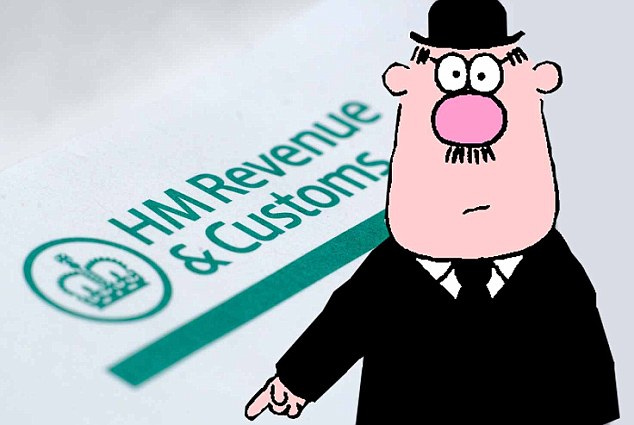
Now, it is entirely possible that I have misunderstood the government’s intentions here. Perhaps this is not a quiet fiscal side-effect at all. Perhaps the VAT being collected on the Grassroots Levy is in fact being carefully set aside to create a new, visionary, state-led programme of support for the grassroots ecosystem. Perhaps somewhere deep inside Whitehall a working group is designing an exciting new initiative, The National Rock Revival Scheme, funded entirely from the VAT on the levy.
One can imagine the launch event. A lectern, a VIP lanyard, a drum machine gently pulsing in the background. An exciting programme of state-sanctioned DJ sets. A live performance by a cross-party supergroup. A remix of “Taxman” featuring an extended spoken-word interlude explaining revised rules that have effectively eliminated the need for you to ‘declare the pennies on your eyes’ but emphasising the need to still retain, and where necessary enhance, a sense of fiscal responsibility. Perhaps a competitive bidding process for venues willing to host “Ministerial Mic Night.” It actually sounds quite magnificent, but it would also be faintly dystopian.
The government has described grassroots venues as “the backbone of the entire music ecosystem”. It has welcomed the idea of a levy and recognised the structural imbalance the sector faces, and actively pushed for a solution to it. Those words were not just helpful, they were essential. They created political space for this mechanism to exist. But there is a clear tension between celebrating the importance of the backbone while claiming tax from the support brace it desperately needs.
Consider what is already happening at the top end. Take your favourite, most successful act playing at Wembley Stadium. With average ticket prices now comfortably north of £80, the VAT element alone is a minimum, say that twice to yourself because it’s important, a minimum of £13.33 per ticket. Multiply that by 90,000 tickets and you are looking at well over £1.2 million in VAT from a single night. Multiple nights multiply that figure again. And that’s just the tickets. Every merch item sold, every drink consumed, adds to that revenue. The Treasury is already benefiting enormously from high value live music events before the £1 levy further adds to those coffers.
To take 16.6p from the pound explicitly created to repair the grassroots touring circuit is not just administratively awkward, it is conceptually absurd. The industry, under some significant pressure from the Government, has created a voluntary support mechanism to address market failure at the bottom of the pyramid. And now the state is inadvertently becoming one of its primary financial beneficiaries.
Right now, the figure lost to VAT is just £100,000. That is uncomfortable but probably containable in terms of reputational damage to the concept. What happens when it is £1 million in deducted VAT? £2 million? £3 million? What will it look like to the public when they realise that the mechanism designed to support struggling grassroots venues, promoters and artists is generating millions in untargeted tax revenue? That reputational risk does not sit with the industry, it sits squarely with government.
Luckily, there is a simple fix. The Grassroots Levy should be exempt from VAT, or the VAT collected on it should be explicitly ring-fenced and returned to the LIVE Trust. There you go, solved it. In fact, why stop there? For every £1 raised by the industry, the government could actually be matching it from the extraordinary VAT windfall already generated by the increase in number and value of arena and stadium tickets. The mechanism and the administrative structure to get it to where it could do the most to support the grassroots exists. The signal it would send about seriousness and partnership would be enormous.
Whether the government would accept that case for additional support or not, this current mess of taking VAT out of the fund needs to be sorted quickly. The Secretary of State and the Minister for Culture should make a clear statement that the Grassroots Levy will not be used to prop up general government finances. They should clarify the VAT position and, in an ideal world, would take the opportunity to commit to matching the industry’s contribution. Leaving this to drift risks turning a genuinely positive, collaborative policy into a slow-burning political problem.
Losing £100,000 to VAT, as has already happened, is bad enough. Losing £1 million will be indefensible. Losing £3 million will look like something else entirely. The public will justifiably start to ask why the government is one of the biggest beneficiaries of a grassroots support scheme, and the current high levels of support for it among music fans will ebb away.
This is so simple to fix that I expect to be able to tell you it was resolved before you read a single word of my next column. On this one, genuinely, I would hold your breath. Because the current approach is, simply, indefensible.
Reminds me of when Bob Geldof got even the coldest of politicians to 'turn' and donate VAT from the Live Aid single back to the campaign.
What is worrying also, is that this basic VAT charge could deter those you/we need on board, who may use it as a stick to beat the idea with. In contrast we need the big names already on board, to raise this point and hopefully influence people in gov't to make the right decisions.
Thanks for another great article and for relaying the info.
Keep these decision makers accountable 24/7👍Another great article Mark.